
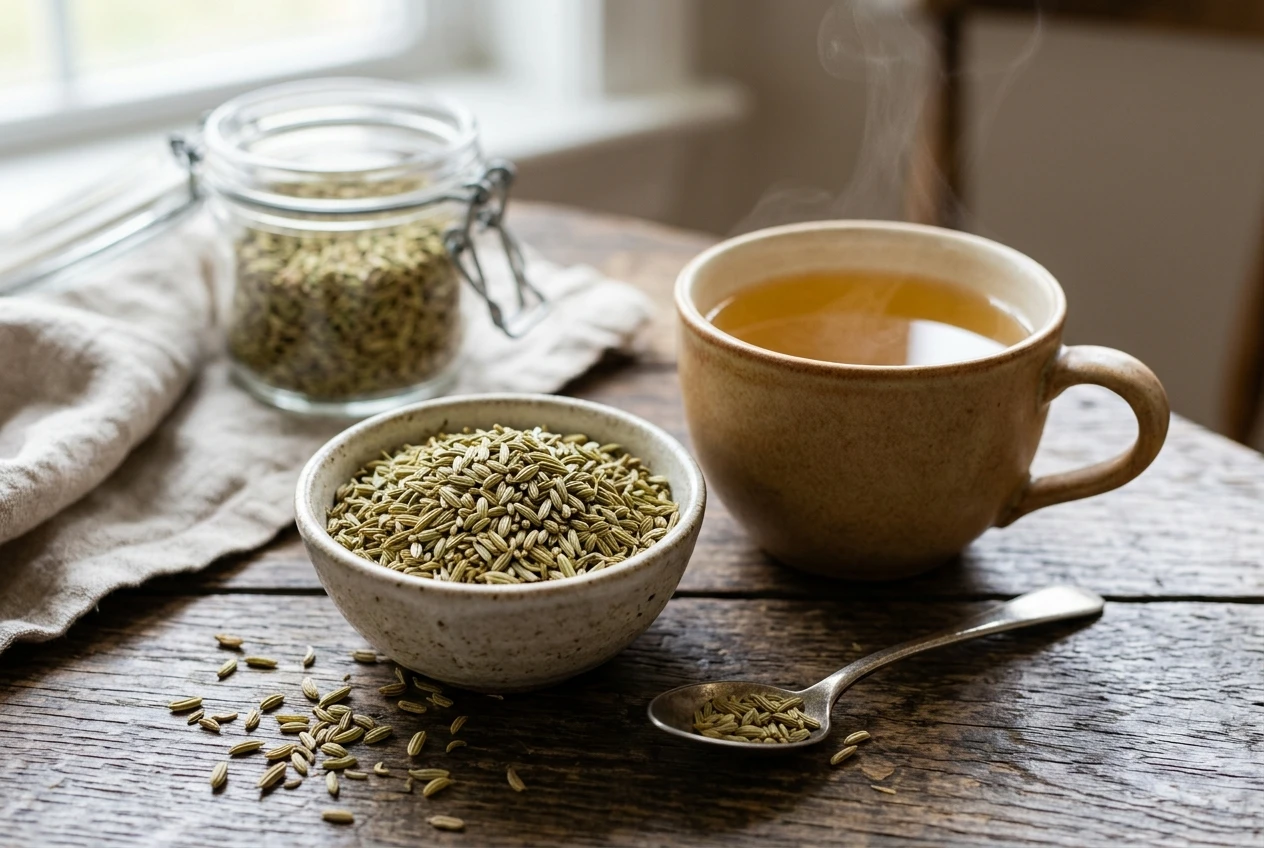
Walk out of many Indian restaurants and you will find a small bowl of fennel seeds by the till, sometimes coated in sugar and mixed with sesame or coconut. This after-meal habit is called mukhwas, which roughly means “mouth freshener,” and it has two jobs: freshening the breath and settling the stomach. Fennel seeds for gas are one of the oldest kitchen remedies still in everyday use, and the practice is simple enough to try tonight.
This guide covers how the seeds are used, what the research supports, three ways to prepare them, how much to take, who should be careful, and when gas points to something fennel cannot fix.
Why fennel seeds became the after-meal seed in Ayurveda and beyond
In Ayurvedic practice, fennel (saunf) is treated as a cooling, gently aromatic seed that suits the end of a meal, when digestion is at its busiest. Chewing a pinch of seeds after eating is a cultural routine in parts of South Asia, and it persists because it is easy, cheap and pleasant. The seeds taste faintly of anise and carry a light sweetness, so people actually keep doing it.
Fennel is not only an Indian tradition. Mediterranean cooking uses it in sausages, breads and braises, and European herbal medicine has long listed fennel seed among its digestive herbs. Several unrelated food cultures arrived at the same use: a little fennel with or after a heavy meal.
That agreement does not prove the seeds work. It does explain why researchers have studied fennel and why modern herbal references still include it.
What fennel does in the gut: the carminative idea and what the research actually shows
Herbalists call fennel a carminative, meaning an herb traditionally used to ease gas and cramping. The seeds contain aromatic oils, with anethole the main one. In laboratory studies, fennel preparations relax intestinal smooth muscle, which could plausibly reduce the spasms that make trapped gas painful.
Laboratory findings in isolated tissue do not automatically carry over to a person eating a teaspoon of seeds. The human evidence is smaller and mixed:
- Some small trials have tested fennel, usually as a standardized oil or extract, for colic, cramping and functional gut symptoms, and a number reported improvement.
- Many of those studies are small, short, vary in preparation, and in some cases have design weaknesses that limit how much weight they can bear.
- Most trials do not test the kitchen version, a spoonful of whole seeds chewed or steeped, so the results are only loosely applicable to it.
A fair summary is that fennel has a plausible mechanism, a long track record, and encouraging but limited trial data. It is a reasonable low-risk thing to try for occasional gas and heavy digestion. It is not a proven treatment for any digestive condition, and nothing in this article should be read as one.
Chewed, steeped or crushed: three ways to prepare fennel and which fits which situation
Chewed whole seeds
This is the mukhwas method. Take about half a teaspoon of seeds and chew them slowly for a minute or two, swallowing the softened bits. Lightly dry-roasting the seeds in a pan for a minute or so, until they smell fragrant, makes them crunchier and mellower.
Chewing suits the end of a meal at home or at work, because it needs no equipment. It also freshens the breath. The downside is that the seeds are tough, and some people dislike the texture or the strong anise flavor.
Steeped as a tea
Use about one teaspoon of seeds per cup. Crush them just before steeping, for example in a mortar or under the flat of a knife, because crushing opens the seed and releases the aromatic oil. Pour freshly boiled water over them, cover the cup so the oil does not escape with the steam, and steep for 10 minutes. Strain and sip.
Tea suits an evening when your stomach feels full or tight, since the warm liquid is soothing in its own right. It takes more time than chewing, and the flavor is milder than you might expect.
Crushed into food or water
If neither method appeals, crushed fennel can go into a meal itself: stirred into lentils or rice, mixed into yogurt, or sprinkled on roasted vegetables. This works best with foods that commonly cause gas, such as beans and cruciferous vegetables, because the fennel is already in the meal when digestion starts. A cooled version, steeped seeds served as a room-temperature drink, suits hot weather.
Choose by situation:
- After a restaurant meal or at your desk: chew a pinch of seeds.
- Heavy, bloated evening at home: steep a cup of tea.
- Cooking something known to cause gas: crush the seeds into the dish.
How much to use and when to take it relative to meals
Fennel has no single established dose for gas. Herbal references generally describe seed use in the range of a few grams a day, which works out to a couple of teaspoons at most. A practical starting point is half a teaspoon chewed, or one teaspoon steeped in a cup, once after a meal.
Timing is flexible. Most traditional use is right after eating or within about half an hour, when gas and fullness tend to show up. Some people prefer to have a cup of tea shortly before a meal they expect to be heavy. Try the same approach for a week and note whether you feel any difference, rather than changing the amount and timing together.
More is not better. Fennel contains estragole, a compound that has been a safety concern at high intake from concentrated sources. Occasional kitchen amounts are very different from daily high doses of oil or extract. Keep to one or two small servings a day, and skip fennel essential oil for internal use unless a qualified practitioner has advised it.
If a week or two of sensible use makes no difference, stop. The seeds do not work for everyone.
Who should be careful: pregnancy, allergies to the carrot family, medication questions and children
Pregnancy and breastfeeding. Fennel is commonly eaten as a spice in food, but concentrated use, such as regular strong tea, is different. Because of its estrogen-like activity and the limited safety data, many herbal sources advise caution or avoidance during pregnancy. Ask your midwife or doctor before using it as a remedy, and the same applies while breastfeeding.
Allergy to the carrot family. Fennel belongs to the Apiaceae family along with carrot, celery, parsley, dill and coriander. People allergic to celery or certain related plants can react to fennel. Symptoms may include an itchy mouth, swelling or hives. Stop at once if any of these occur, and seek urgent care for swelling of the throat or trouble breathing.
Medications and hormone-related conditions. Fennel’s mild estrogen-like activity is the reason sources advise checking first if you take hormonal medicines or have a hormone-sensitive condition. Some references also list certain antibiotics, such as ciprofloxacin, and blood thinners as worth discussing. Evidence here is limited, so a pharmacist can tell you whether it matters for your prescription. Bring this up before you start rather than after.
Children and infants. Fennel tea is sometimes given for infant colic in traditional practice, but this is not a do-it-yourself matter. Pediatric advice generally discourages herbal teas for babies, and the estragole question applies more strongly to small bodies. Talk to a pediatrician before giving fennel to any child.
When gas isn’t a fennel problem: signs to see a doctor, and how fennel fits next to peppermint and chamomile
Occasional gas after a big meal is ordinary. Gas that keeps coming back, or arrives with other symptoms, deserves a medical conversation instead of a longer herb trial. See a doctor if you notice:
- Unexplained weight loss
- Blood in the stool, or black, tarry stools
- Persistent vomiting, or trouble swallowing
- Severe or worsening abdominal pain
- Fever alongside digestive symptoms
- Bloating that persists for weeks, especially in women, where it can occasionally signal something more serious
- A clear change in bowel habits that does not settle
- Symptoms that wake you at night
Gas can also come from causes an herb will not change, such as lactose intolerance, celiac disease, or small intestinal bacterial overgrowth. A seed will not correct any of these, and masking symptoms can delay a diagnosis.
When the cause is just a heavy meal or fast eating, fennel sits comfortably beside other herbs. Chamomile is the gentler choice when tension and a nervous stomach go with the discomfort. Peppermint is another carminative with more trial data in IBS, and the peppermint oil trials come with their own cautions, including that it can aggravate reflux in some people. Fennel is a useful alternative for those who find peppermint makes heartburn worse.
Building a simple after-dinner fennel habit
A habit works better if it takes almost no effort. Keep a small jar of whole fennel seeds next to the kettle or on the table, and buy whole seeds rather than ground, since they keep their aroma longer. Fresh seeds smell sweet and licorice-like when rubbed; if the smell is faint, replace them.
A simple routine looks like this:
- Finish dinner and wait a few minutes.
- Chew half a teaspoon of seeds, or crush a teaspoon into a mug and steep it covered for 10 minutes.
- Sit for a little while before lying down, since a short pause helps with fullness.
Run this for one to two weeks and note when gas is worst and whether it eases. Eating more slowly and cutting back on carbonated drinks during the same period will also change how you feel, so keep those habits steady if you want to judge the seeds fairly.
If the results are good, you have a cheap, pleasant ritual. If they are not, you have lost nothing but a few seeds, and the symptom log is useful to bring to a doctor. To work out which remedy fits which kind of bloating, read the guide on matching the natural fix to what’s causing your bloating.