
If you live with recurring cramping, gas, and unpredictable bowel habits, peppermint oil for IBS is probably one of the first natural options you have come across. It is also one of the few herbal remedies for irritable bowel syndrome that have been tested in randomized trials, which makes it worth a closer look. The evidence is real but modest, and the form you take matters a great deal.
This article covers what the research shows, what the labels should say, who should avoid it, and when symptoms call for a doctor instead of a supplement.
How peppermint oil calms the gut: the antispasmodic idea in plain language
The gut wall has smooth muscle that contracts in waves to move food along. In IBS, those contractions can become irregular or exaggerated, and the gut can also be more sensitive to normal stretching. That combination is a common explanation for cramping, pain, and urgency.
Menthol, the main active compound in peppermint oil, relaxes smooth muscle. Lab studies suggest it does this by interfering with calcium movement into muscle cells, which reduces how strongly the muscle contracts. Menthol may also affect pain-sensing nerves in the gut lining. This is the “antispasmodic” idea: if the muscle spasms less, there may be less pain.
The mechanism is plausible and fairly well described in lab work, but it does not by itself prove that a capsule helps a person with IBS. That question is answered by clinical trials.
What the clinical trials found, and where the evidence is thinner than the headlines
Several systematic reviews and meta-analyses have pooled the randomized trials of peppermint oil in adults with IBS. Their general finding is that peppermint oil performed better than placebo for overall symptom improvement and for abdominal pain. That is the basis for most “peppermint oil works for IBS” headlines.
The caveats matter just as much:
- Many trials were small. Small studies can overestimate benefit, and pooling them does not fully fix that.
- Quality varied. Trials differed in how they were run, how long they lasted, and how they defined improvement.
- Products and doses differed. Different capsule formulations were tested, so the results do not describe one standard product.
- Placebo response in IBS is high. Many people improve on placebo, so the useful number is the gap between peppermint and placebo, which is moderate rather than dramatic.
- Long-term data is limited. Most trials ran for weeks, not years.
Professional guidelines reflect this caution. The American College of Gastroenterology’s 2021 IBS guideline, for example, offers a conditional suggestion for peppermint oil and rates the evidence quality as low. In practice, that means it is a reasonable option to discuss, not a proven fix.
The trial results also say little about bloating specifically. The clearest signals were for global symptoms and pain, so expect the most benefit there, if any.
Why enteric-coated capsules are not the same as tea or raw oil
Almost all the positive trial evidence involves enteric-coated peppermint oil capsules. The coating is designed to resist stomach acid and dissolve further along, in the small intestine, where the oil can act on gut muscle. It also reduces the chance of the oil releasing in the stomach and causing heartburn.
That design makes the other forms quite different.
Peppermint tea
Tea is a pleasant, low-risk drink for most people, but it contains far less oil than a capsule, and its effect on IBS has not been tested in the same way as capsules. Peppermint can also relax the muscle ring at the bottom of the esophagus, which may let stomach acid rise. For someone with reflux, tea can make symptoms worse.
Raw essential oil
Pure peppermint essential oil is highly concentrated. It is not meant to be swallowed by the drop, and there are documented cases of serious harm from ingesting concentrated essential oils, particularly in children. Do not substitute essential oil from a diffuser bottle for a capsule product made and labeled for oral use.
Non-coated capsules and mints
Plain peppermint oil capsules without an enteric coating release in the stomach, so they are more likely to cause reflux. Peppermint candies and gum contain flavoring and sugar or sweeteners, not a therapeutic dose, and some sweeteners can themselves trigger IBS symptoms.
How people typically try it: timing, label checks and what to watch for
If you decide to try peppermint oil capsules, a few practical checks reduce problems.
Check the label for:
- The words “enteric-coated” or a delayed-release description
- The amount of peppermint oil per capsule, in milligrams
- A clear dosing instruction and a list of any other ingredients
- Third-party testing, such as USP or NSF marks, if the brand offers it
Supplements are not reviewed for effectiveness before sale, so quality varies between brands. A product that lists an exact amount of oil and a delayed-release design is easier to compare with what was studied than one that only says “peppermint extract.”
Timing and dose: Labels commonly direct one capsule a few times a day, often shortly before meals, and trials usually ran for several weeks. Follow the instructions on your product rather than a number from an article, and ask a pharmacist if you are unsure. Taking capsules with a large amount of hot liquid, or alongside antacids or acid-reducing medication, can dissolve the coating too early, so ask a pharmacist about timing if you use those.
Keep a simple record. Note your pain, bloating and bowel pattern for a week or two before you start, then continue while you take it. IBS symptoms fluctuate on their own, so a written record is a more reliable way to judge whether the capsules are helping than memory. If nothing has changed after the period suggested on the label or by your clinician, it is reasonable to stop.
Side effects and who should skip it, including heartburn and reflux
Peppermint oil capsules are generally well tolerated in trials, but side effects do occur. The most common are:
- Heartburn or acid reflux
- Nausea
- A burning or irritating sensation when passing stools
- Mouth or throat irritation if a capsule opens or is chewed
Be cautious or avoid peppermint oil, and speak with a clinician first, if you:
- Have GERD, frequent heartburn, or a hiatal hernia. Peppermint’s muscle-relaxing effect works against the valve that keeps acid down. Our guide to natural remedies for acid reflux symptoms covers gentler options.
- Have gallstones, bile duct problems or liver disease
- Have G6PD deficiency, since menthol-containing products are commonly flagged for caution in this condition
- Are pregnant or breastfeeding, as safety data is limited
- Take prescription medications, especially drugs processed by the liver or medicines that reduce stomach acid
- Are considering it for a young child. Menthol products can cause breathing problems in small children, so oral use should only be under medical advice.
Swallow capsules whole. If you get new heartburn, stop taking them and see whether it settles.
When peppermint oil isn’t enough: signs to see a doctor
IBS is diagnosed by a clinician after other conditions are considered. If you have never had a formal diagnosis, get one before relying on supplements, because several conditions, including celiac disease and inflammatory bowel disease, can look like IBS at first.
See a doctor promptly if you notice:
- Blood in your stool, or black, tarry stools
- Unintended weight loss
- Diarrhea that wakes you at night
- Persistent vomiting or difficulty swallowing
- Fever alongside bowel symptoms
- Symptoms that begin for the first time after about age 50
- Anemia, or a family history of bowel cancer, celiac disease or inflammatory bowel disease
- Pain that is severe, constant, or getting worse
Also check in with a clinician if you have tried peppermint oil sensibly for several weeks without relief. Other treatments exist, including other antispasmodic medications, fiber adjustments, dietitian-guided eating plans and therapies aimed at the gut-brain connection.
Pairing it with gentler habits: chamomile, bloating triggers and food patterns
Peppermint oil is only one piece of managing IBS. Habits often make as much difference as any capsule.
Chamomile. Chamomile tea is a traditional digestive soother, and it avoids the reflux concern that comes with peppermint. Research on it for IBS is much thinner than for peppermint oil, so treat it as a comforting routine, not a treatment. Our piece on using chamomile to soothe digestive discomfort goes into how to prepare it.
Common triggers to watch for:
- Large, fatty, or very spicy meals
- Caffeine and alcohol
- Carbonated drinks
- Sugar alcohols such as sorbitol and xylitol in sugar-free gum and sweets
- Eating very quickly or skipping meals, then eating a lot at once
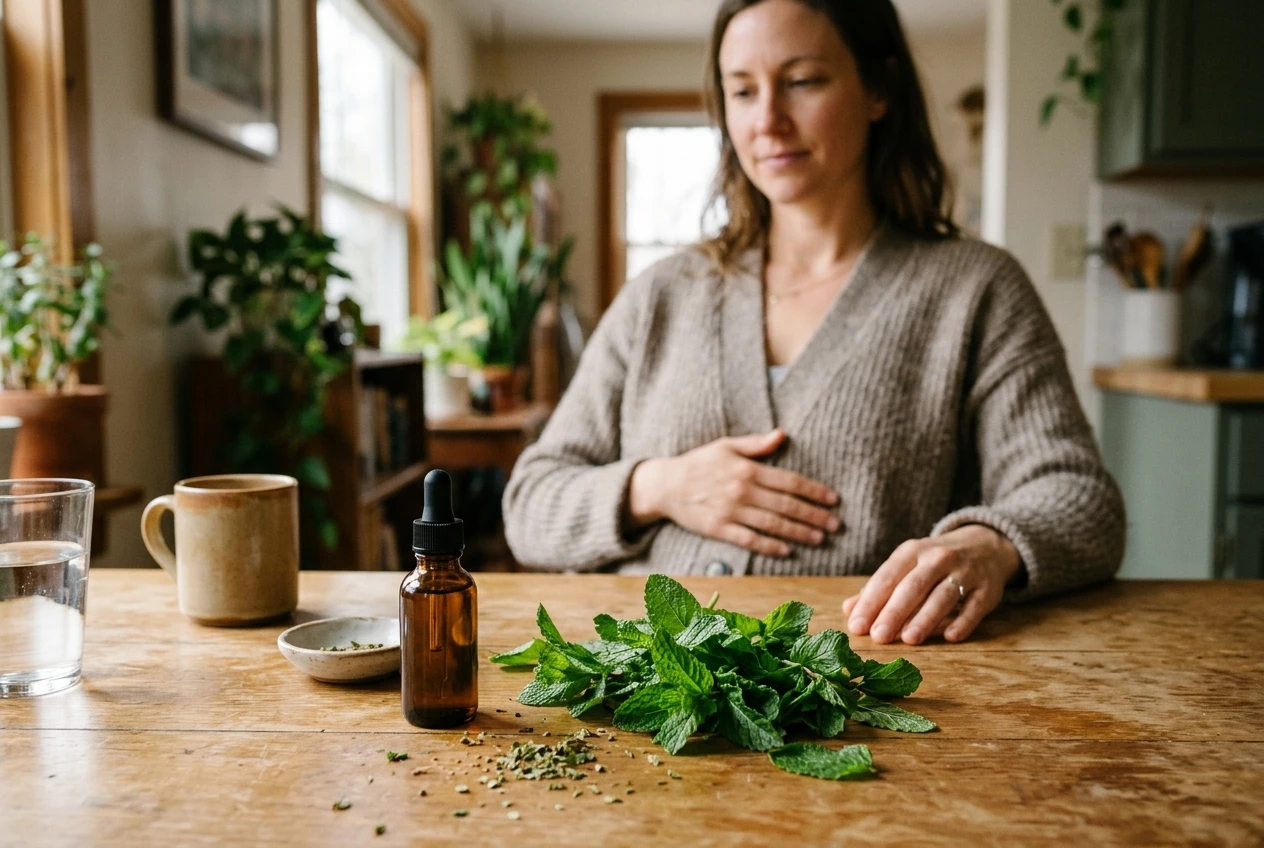
Food patterns. A food and symptom diary can show which items reliably bring on your symptoms. The low FODMAP approach, which temporarily restricts certain fermentable carbohydrates and then reintroduces them one at a time, has good research support for IBS. It is best done with a registered dietitian, because staying on a restricted diet long term can reduce the variety your gut bacteria rely on.
Other habits. Regular meals, steady physical activity, and stress management can all affect gut symptoms, since the gut and nervous system are closely connected.
This article is general information, not medical advice. Peppermint oil may suit some people with IBS and not others, and a doctor or pharmacist who knows your history is the right person to confirm it is safe for you.