
Slippery elm is a bark powder that turns thick and slimy when it meets water. That texture is the whole reason people use it for an irritated stomach, and it is also the reason for some confusion. A gel that coats tissue is not the same as a treatment that repairs it. This article covers what slippery elm for stomach lining support can realistically do, how to prepare it, when to take it, and what to check before you buy or swallow any of it. Slippery elm for stomach lining.
What mucilage is and why slippery elm bark is full of it
Mucilage is a group of long-chain carbohydrates (polysaccharides) that plants make and store, often in seeds, roots and bark. When mucilage meets water it absorbs a lot of it and swells into a thick, slippery gel. Okra, flaxseed, marshmallow root and aloe leaf all contain it.
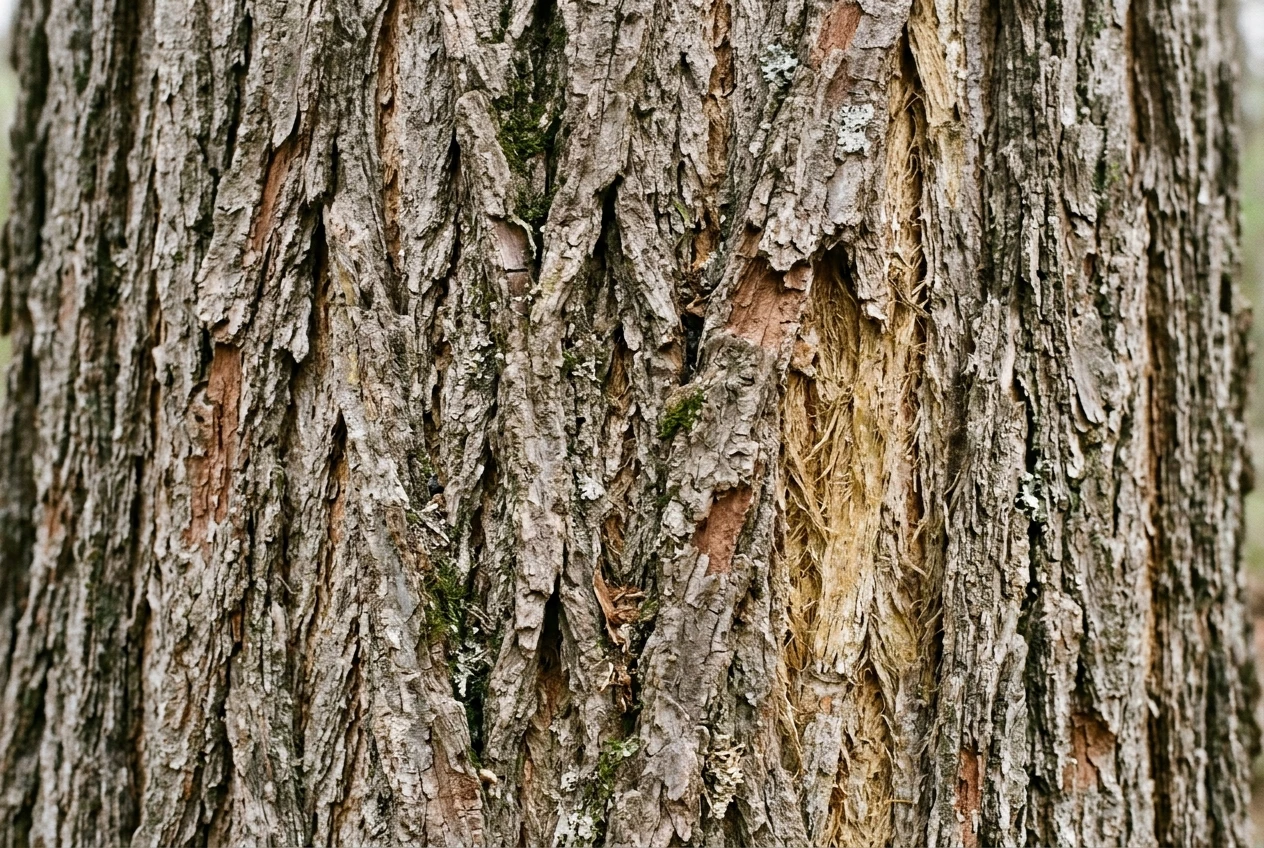
Slippery elm (Ulmus rubra) is a North American tree, and the part used in herbal products is the inner bark, the pale layer just under the rough outer bark. It is unusually rich in mucilage. The name comes from the texture: chew a small piece of the fresh inner bark and it turns slick and gluey. Dried and ground, it becomes a fine, beige powder that smells faintly sweet and a little like maple.
Because the mucilage is already in the powder, preparing it is simple. Mix the powder with liquid and the gel forms within a minute or two. Hot water speeds this up and gives a smoother, more even texture.
How the gel coats and soothes: what we know and what is still only tradition
Herbalists call plants like this demulcents, meaning they form a soothing, protective film over irritated mucous membranes. The idea is straightforward. When you swallow slippery elm gel, it passes over the lining of the throat, esophagus and stomach and may sit on the surface for a while. That coating could cushion irritated tissue from stomach acid and other irritants, and it may also stimulate some mucus production in the digestive tract, though that part is less well established.
Here is what holds up:
- Long traditional use. Slippery elm has been used for sore throats, coughs, and digestive upset in North American herbal practice for generations.
- A plausible mechanism. A demulcent gel physically coating tissue makes sense, and it is why people feel it settles a raw throat or a burning stomach.
- Laboratory and small human studies. Some research suggests slippery elm bark has antioxidant properties and may influence gut function. Most of the human work is small, and some of it tests blends of several herbs rather than slippery elm alone, so the effect cannot be credited to slippery elm by itself.
Here is what is not established:
- That slippery elm heals ulcers, repairs damaged stomach lining or rebuilds it.
- That it treats the cause of reflux, gastritis, IBS or any other condition.
- That any particular dose works better than another.
So the honest summary is that slippery elm is a soothing agent with a reasonable explanation and limited clinical proof. If you feel better after a cup of it, the coating effect is the likeliest reason. That is relief, which is a good thing to want, but it does not mean the underlying irritation has been dealt with.
Who tends to reach for slippery elm, and when something else fits better
People usually try slippery elm for occasional, mild problems: a burning feeling after a heavy or spicy meal, a raw throat from reflux, general stomach irritation, or a gut that feels unsettled after a stressful week. It suits people who want something gentle with a mild taste and no stimulant effect.
It fits less well in some situations:
- Nausea. A coating gel does little for queasiness. A ginger tea for morning nausea is a better match, since ginger has research behind it for that specific symptom.
- Bloating and gas. Bloating has several causes, and a thick gel will not address most of them. Matching the remedy to the cause works better, and a guide to natural remedies for bloating can help you sort that out.
- Cramping or spasm. Peppermint and chamomile are the traditional choices for muscle-type discomfort in the gut.
- Frequent or severe heartburn. If you reach for something several times a week, that pattern deserves a conversation with a doctor rather than a herbal workaround.
Slippery elm is also high in fiber-like material, so some people find it mildly constipating or filling. Others get no effect at all. Start with a small amount and see how you respond.
Powder, lozenges or capsules: choosing a form and how to make a simple slippery elm drink
Each form suits a different purpose.
- Powder gives the most direct contact with the throat and stomach because you drink it as a gel. It is the usual choice for stomach complaints. Look for a product with slippery elm bark as the only ingredient.
- Lozenges are for the throat. They dissolve slowly and coat the area on the way down, which suits reflux-related throat irritation, but most contain sweeteners, flavorings or other herbs, so read the ingredient list.
- Capsules are convenient and tasteless, but the powder inside is released in the stomach with only whatever liquid you swallowed. Taken with a full glass of water they can work, though you get less of the gel’s coating action than from a prepared drink.
A simple slippery elm drink
Typical preparation looks like this. Check your product’s label first, because strengths and recommended amounts vary by brand, and follow the label if it differs from what is written here.
- Put about one teaspoon of slippery elm powder in a mug.
- Add a splash of cool water and stir into a smooth paste. This step prevents lumps, because the powder clumps if it meets hot water directly.
- Pour in about one cup of hot (not boiling) water while stirring.
- Let it stand for a few minutes. It will thicken to something between thin porridge and a loose pudding.
- Add a little honey or cinnamon if you like. The plain drink has a mild, slightly earthy taste and an unusual texture that some people dislike.
If it is too thick to drink comfortably, add more water. Sip it slowly. Anyone who has trouble swallowing should be cautious with any thickening gel and speak to a doctor first.
When to take it, and why to space it from medications and supplements
Many people take slippery elm between meals or at the time symptoms usually appear, such as after dinner or before bed. Taking it on a mostly empty stomach lets the gel reach the stomach lining without much food mixing in. If the drink is for evening reflux symptoms, some people have it a while before lying down. Drink water through the day as well, since the mucilage works by absorbing fluid.
The more important timing issue is spacing. A thick gel coating the digestive tract can slow or reduce how well other substances are absorbed. For that reason, herbal references commonly advise taking slippery elm at least one to two hours apart from oral medications and from supplements. This matters most for medicines where the dose needs to be exact, such as thyroid medication, heart medication, anticonvulsants or anything with a narrow safety margin.
Practical steps:
- Tell your pharmacist or doctor you are using slippery elm and ask how far apart to take it from each medication.
- Keep a consistent schedule so you do not have to guess each day.
- If you are pregnant, nursing, or giving it to a child, check with a healthcare provider first. There is not enough solid safety data to make blanket recommendations.
Allergic reactions to slippery elm are uncommon but possible. Stop using it if you develop a rash, itching or swelling.
If you want more options for supporting digestion generally, the site’s guide to home remedies for digestive health covers a wider range of approaches.
Sourcing slippery elm responsibly, since the tree is under harvesting pressure
Slippery elm is a wild-harvested medicinal plant, and its popularity has put pressure on wild trees. Harvesting the inner bark can kill the tree if it is stripped around the trunk, and the species also faces threats from elm disease. Plant conservation groups that track medicinal herbs have listed slippery elm as a species to watch or at risk, so it is worth buying with some care.
What to look for when you shop:
- Sourcing information. Brands that say where the bark comes from and how it was harvested are a better bet than those that say nothing.
- Cultivated or sustainably harvested claims. These are worth looking for, though verify them where you can, since the terms are not tightly regulated.
- Single-ingredient products. Cheaper powders may be diluted with fillers or other plant material. The label should list slippery elm bark and nothing else, unless you are deliberately buying a blend.
- Third-party testing. Supplements are not tested for strength or purity before sale in most places, so an independent testing seal gives you a little more confidence.
Use only what you need. If a gentler option such as chamomile does the job, the chamomile guide for digestive discomfort covers an easier-to-source alternative that is not under the same pressure.
When stomach pain is a reason to see a doctor instead of reaching for herbs
A soothing gel is suited to occasional, mild irritation. Some symptoms need medical assessment, and herbs can delay getting it. See a doctor promptly if you have:
- Black, tarry or bloody stools, or vomit that is bloody or looks like coffee grounds
- Severe or worsening abdominal pain, or pain that wakes you at night
- Difficulty or pain when swallowing, or food that feels stuck
- Unintentional weight loss
- Persistent vomiting
- Chest pain, pressure, or pain spreading to the arm, jaw or back, which can be mistaken for heartburn and needs urgent attention
- Heartburn or stomach discomfort most days, or lasting more than a couple of weeks
- New digestive symptoms in later life, or a family history of stomach or digestive cancers
Slippery elm may take the edge off a symptom while an underlying problem such as an ulcer, an infection, gallbladder trouble or something more serious goes unexamined. Relief from a herb is not evidence that the cause is minor.
If your symptoms are mild and occasional, slippery elm is a reasonable, low-cost thing to try, with the spacing and sourcing points above in mind. Treat it as a way to ease discomfort, and keep in mind that the evidence supports soothing, not repair. This content is general information, not medical advice, and the site’s disclaimer explains how to use it.