
You can drink lavender tea and diffuse lavender oil on the same evening, and the two do different jobs. The scent is something you breathe while the lights are low. The tea is a warm drink you hold and sip slowly. Used together, in a set order, they give your evening a clear signal that the day is over. This lavender bedtime routine shows you the order, the brewing, the safety rules, and what to buy.
Why a ritual can matter as much as the herb
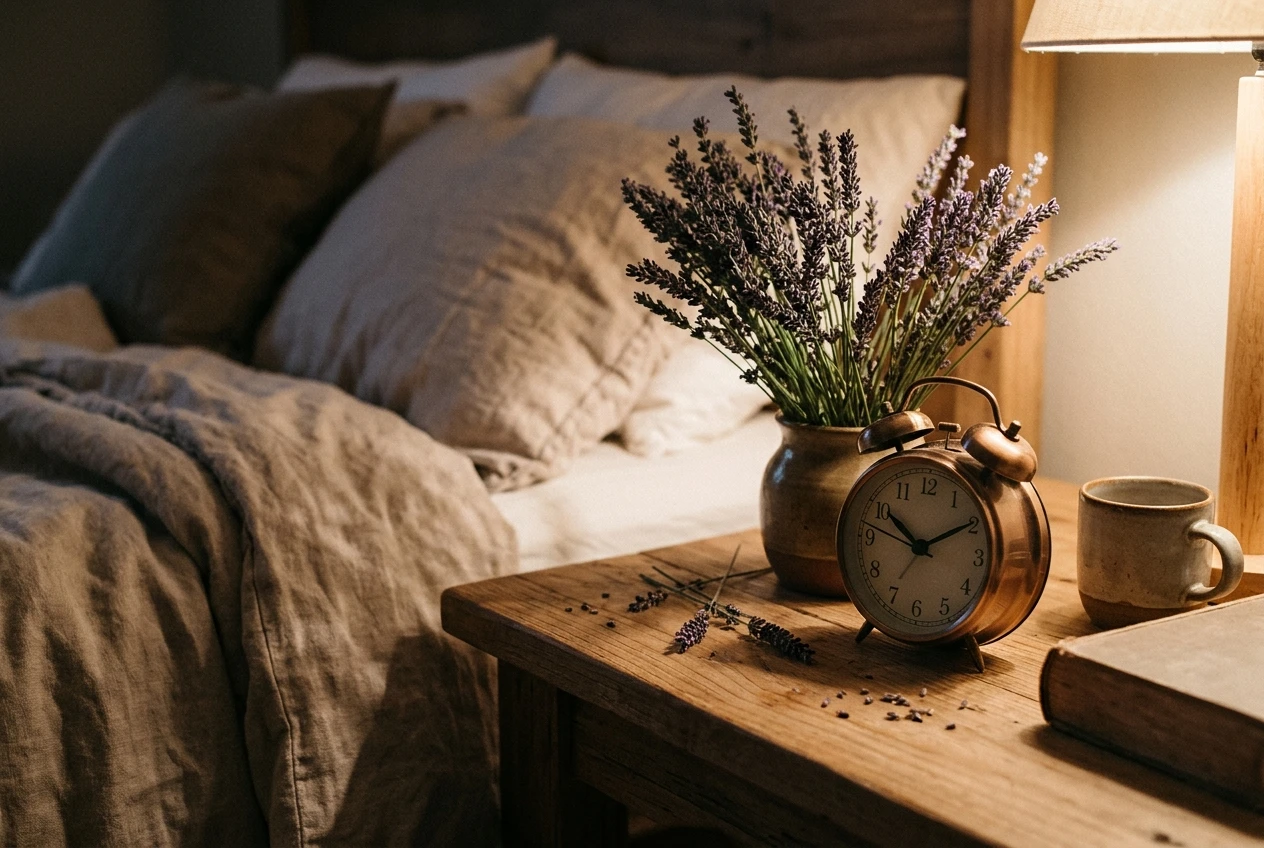
Repeating the same few actions in the same order every night teaches your body what comes next. The kettle, the dimmer lights and the familiar smell become cues, and cues work best when they are predictable. That is a reasonable explanation for why a simple evening routine helps some people, and it does not depend on any herb doing something dramatic.
Lavender suits this because it is gentle, easy to find, and has a distinctive smell and flavor that you will associate with winding down. Whether it has effects beyond that is a separate question, and the human trial evidence is covered in the breakdown linked at the end of this piece. Here the goal is a routine you can actually repeat.
Keep your expectations modest. A herbal ritual is a way to make the last hour of your day calmer. It will not fix a serious sleep problem, and nothing in this article is a treatment for one.
Scent versus sip: what lavender aromatherapy and lavender tea each do in your evening
Aromatherapy and tea are different experiences, so give each a different place in the evening.
Scent works in the background. A diffuser fills the room with lavender while you do other things: dimming lights, tidying, reading. It asks nothing of you, and it marks the room as the place where you wind down. It is also the part that needs the most care, because essential oils are concentrated (more on that below).
Tea is something you do on purpose. Making it takes five to ten minutes, and drinking it takes another ten or so. The warmth, the steam and the slow pace all contribute, and so does the plant itself. Tea is the part of the routine that gets you to sit still.
One caution about timing: a large mug right before bed can mean a trip to the bathroom at 2 a.m. Finish your tea about 30 minutes before lights out.
Building the routine: a 45-minute wind-down, in order
This sequence runs from 45 minutes before bed to lights out. Adjust the timings to your evening, but keep the order.
- 45 minutes before bed: set the room. Turn off overhead lights and use lamps. Start the diffuser in the room where you will spend the next half hour, not necessarily the bedroom. Put the kettle on.
- 40 minutes: finish the day’s chores. Do the last small tasks: set out tomorrow’s clothes, check the door, fill a glass of water for the nightstand. Getting these done now keeps them from nagging at you in bed.
- 30 minutes: brew and drink the tea. Steep it properly (the next section covers how) and drink it away from screens. Sit down for it.
- 20 minutes: wash up. A warm shower, or just washing your face and brushing your teeth, fits here. Do it after the tea so you are not brushing twice.
- 10 minutes: something quiet. Read a paper book, stretch gently, or write a short to-do list for tomorrow. Choose something with no notifications.
- Lights out: turn the diffuser off. Let it run during wind-down only, and switch it off before you sleep. Leave the room’s air to refresh overnight.
If 45 minutes is too much on a busy night, drop the chores step and keep the rest. The tea and the quiet activity are the parts worth protecting.
How to brew lavender tea properly (and what to blend it with)
Lavender tea is easy to ruin. Too much turns it soapy and bitter, so start with less than you think you need.
- Use about one teaspoon of dried culinary lavender buds per cup (8 ounces) of water. If the result tastes too perfumed, cut back to half a teaspoon next time.
- Bring water to a boil, pour it over the buds, and cover the cup so the aromatic oils stay in the tea instead of drifting off as steam.
- Steep for 5 to 10 minutes, then strain. Longer steeping increases the bitterness without adding anything pleasant.
- Drink it plain or with a small amount of honey. Lemon works well too.
Lavender has a strong floral flavor, so many people blend it. Good partners include:
- Chamomile: soft and apple-like, and it smooths out lavender’s sharpness. A classic evening pairing.
- Lemon balm: a mild lemony mint that takes the edge off the floral taste. If you want to know what this herb is used for at night, our post on lemon balm for nighttime anxiety and restlessness goes into it.
- A slice of orange peel or a small piece of vanilla bean: useful if you find lavender alone too perfumed.
Lavender, chamomile and lemon balm are all caffeine-free, but check any pre-made “relaxing” blend, since some include other ingredients. Read the label. If you are pregnant, breastfeeding, taking sedating medication, or have a medical condition, check with a doctor or pharmacist before drinking herbal teas regularly.
Using lavender oil safely: diffusing, dilution, pets, kids, and pregnancy
Lavender essential oil is highly concentrated, and the rules below matter more than any other part of this routine.
Never swallow essential oil. Do not add it to tea, water, honey or food. Tea needs dried culinary buds, and oil is for scent or, diluted, for skin. Putting a drop of essential oil in your mug is one of the most common mistakes people make with lavender.
Diffusing.
- Use the amount of oil your diffuser’s instructions recommend, usually a few drops in the water.
- Run it in a room with some air exchange, and do not leave it going all night.
- Stop if you get a headache, throat irritation, a cough or any sign that the scent is too strong.
On skin. Essential oil should always be diluted in a carrier oil (such as sweet almond or jojoba) before it touches skin. Follow a dilution chart from a reputable aromatherapy source, and test a small patch first. Do not put undiluted oil on your skin or pillow.
Pets. Many essential oils can be harmful to animals. Cats are especially sensitive, and birds, small mammals and dogs can also be affected. If you have pets, diffuse in a room they can leave, keep the door open for them, and keep bottles out of reach. If an animal drools, vomits, seems unsteady or acts unusually, call a veterinarian.
Children. Keep oils locked away or out of reach, since a swallowed bottle is a medical emergency. Ask a pediatrician before diffusing around babies and young children.
Pregnancy and breastfeeding. Ask your doctor or midwife before using essential oils or drinking herbal teas regularly. This is a case where “natural” does not settle the question.
What to buy: culinary lavender, a diffuser, and what to ignore
Culinary lavender buds. Look for dried buds sold specifically for eating or for tea, ideally labeled as culinary and listing the plant’s Latin name, Lavandula angustifolia. Craft-store lavender and potpourri may be treated or sold for decoration, so do not brew them. Buy a small bag first: dried herbs lose flavor over time, and a teaspoon per cup goes a long way. Store the buds in an airtight jar away from light.
A diffuser. A basic ultrasonic diffuser is enough. Choose one with an automatic shut-off, a timer, and a water reservoir that is easy to clean, since a dirty tank can leave residue. You do not need color-changing lights or app control, and a dim, steady light is better for winding down anyway.
Lavender essential oil. Look for a bottle that names the plant species, lists a single ingredient, and comes in dark glass. “Fragrance oil” is a synthetic scent, not essential oil, and it is not the same product.
What to ignore. Skip any product that promises to cure insomnia or treat anxiety, and anything that tells you to swallow essential oil. A quality bag of buds and a simple diffuser cover everything in this routine.
When lavender isn’t enough and what to try next
If you have followed a wind-down routine for a few weeks and still struggle, lavender may simply not be the answer for you. Some people notice little from it, and that is a normal result.
Start with the basics that often matter more than any herb:
- Keep a consistent wake-up time, including on weekends.
- Cut off caffeine earlier in the day.
- Get some daylight in the morning.
- Keep the bedroom cool, dark and quiet.
- Keep screens out of the last half hour.
If you want to try another herb, chamomile and lemon balm are mild options you can drink in the same slot as lavender tea. Stronger herbs such as valerian have their own dosing and cautions, which our guide to valerian root dosage for sleep covers.
See a doctor if you regularly take a long time to fall asleep or wake often through the night, if you snore loudly or wake up gasping, if you feel very sleepy during the day, or if low mood or worry is keeping you awake. These can have causes that no tea will address, and they are worth getting checked.
If you want to know what the human trials actually show for lavender and other sleep herbs, read our breakdown of which herbs help you sleep, then pick one change from this routine to try tonight.