Holy basil benefits for cortisol control are plausible but not proven. Tulsi appears to act on the stress axis that releases cortisol, and small human trials report lower stress scores and sometimes lower cortisol. The trials are short and small, and much of the mechanism comes from animal and lab work.
What does holy basil actually do to cortisol?
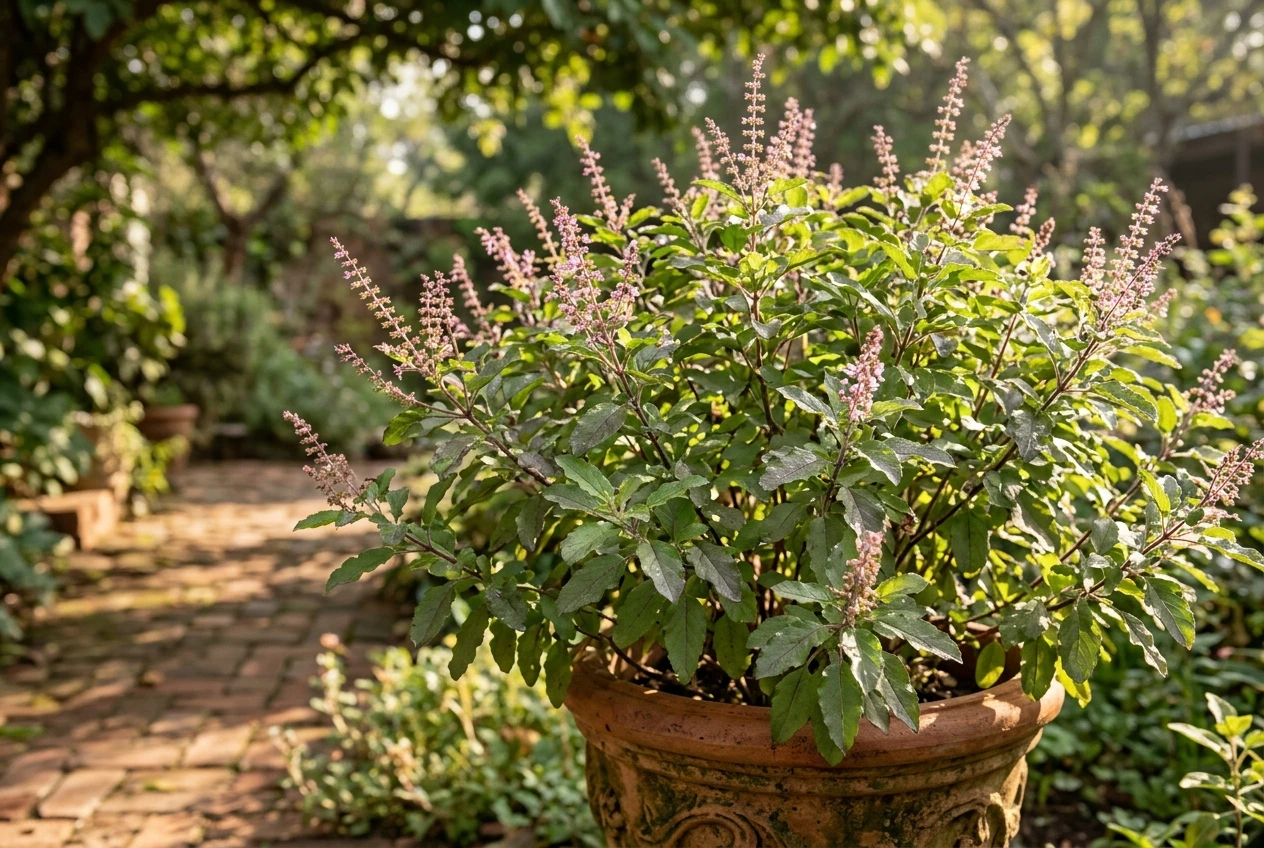
Holy basil is thought to moderate cortisol output when the body is under stress, not to push cortisol down in everyone. That is what the word adaptogen is meant to describe: a plant that nudges the stress response back toward baseline instead of switching it off.
Cortisol is not a problem in itself. It rises in the morning and after real demands, and the trouble comes when it stays elevated for long stretches. Tulsi, also sold as Ocimum tenuiflorum or Ocimum sanctum, is studied for whether it can shorten or soften those elevated periods.
How does tulsi work on the body’s stress response?
Tulsi is proposed to act at several points along the HPA axis, the chain from the brain’s hypothalamus to the pituitary gland to the adrenal glands, which ends with cortisol release. Most of the evidence for this is from animals.
- HPA signalling: In stressed rodents, tulsi extracts have been linked to lower corticosterone, the rodent equivalent of cortisol. This suggests an effect on the signalling that tells the adrenals to release it.
- Antioxidant activity: Tulsi contains compounds such as eugenol, rosmarinic acid and ursolic acid. In lab studies, these reduce oxidative stress, which accompanies prolonged stress in the body.
- Adaptogen behaviour: The adaptogen idea is a framework drawn from traditional use and animal work. It describes a pattern of effects, not a single confirmed pathway.
A rat’s response to a stressor and a person’s response to a deadline are different things, so these findings point to a mechanism worth testing. They do not show it works in people.
What do human trials show, and where is the evidence thin?
Small human trials suggest tulsi may reduce self-reported stress and in some cases lower cortisol, but the evidence is limited. The studies tend to be small, short, and often use a specific extract, so results may not carry over to the tea or capsule you buy.
The main weak points:
- Participant numbers are small, which makes chance findings more likely.
- Many trials rely on questionnaires about stress, which are subjective.
- Cortisol is measured in different ways (saliva, blood) at different times of day, so results are hard to compare.
- Extracts differ in plant part, preparation and strength between studies.
A fair reading is that tulsi looks promising for perceived stress, and the cortisol effect is less settled.
Is tulsi tea enough, or do you need an extract?
Tea is a reasonable low-risk way to try tulsi, but the trial evidence mostly comes from extracts. A cup of tea delivers water-soluble compounds from the leaf, and its strength varies with how much leaf you use and how long it steeps. A standardized extract gives a more consistent amount but is a different product from the tea.
If you buy either, check that the label names the species, states the plant part, and ideally shows third-party testing. Supplement quality varies widely, and a vague “holy basil blend” tells you little. Follow the label directions rather than guessing at amounts.
How long does holy basil take to work, and what should you track?
Trials usually run for weeks rather than days, so a single cup is unlikely to tell you anything. Give any trial of your own a defined period and judge it against notes, not memory.
Track a few simple things:
- A daily stress rating, taken at the same time each day.
- Sleep quality and how easily you fall asleep.
- Mood and afternoon energy.
- Any side effects, such as stomach upset or drowsiness.
Home cortisol tests vary in reliability, and a single reading says little because cortisol changes through the day. Your notes are more useful than one number.
Who should be careful with holy basil?
Check with a clinician first if you are pregnant, trying to conceive, or breastfeeding. Animal studies have raised questions about fertility effects, and there is not enough human safety data to wave them away.
Also ask a clinician or pharmacist if you take any of these:
- Diabetes medication, since tulsi may lower blood sugar.
- Blood thinners, since it may affect clotting.
- Thyroid medication, since animal work suggests tulsi may influence thyroid hormones.
Anyone with a scheduled surgery, a chronic condition, or persistent stress that affects daily life should also talk to a clinician. Ongoing stress can have causes an herb will not address.
How is holy basil different from ashwagandha and rhodiola for stress?
Holy basil has the smallest human evidence base of the three for cortisol specifically, while ashwagandha has been studied more on cortisol and stress measures. Rhodiola is more often studied for fatigue and mental performance under pressure.
Herb Where it is mostly studied Evidence note Holy basil Perceived stress, with some cortisol measures Small, short trials Ashwagandha Stress scores and cortisol More trials, still variable Rhodiola Fatigue and performance under stress Mixed results
Which one suits you depends on how your stress shows up, whether as tension, exhaustion or poor focus.
If you are still deciding which herb fits your kind of stress, read the matching guide next.